
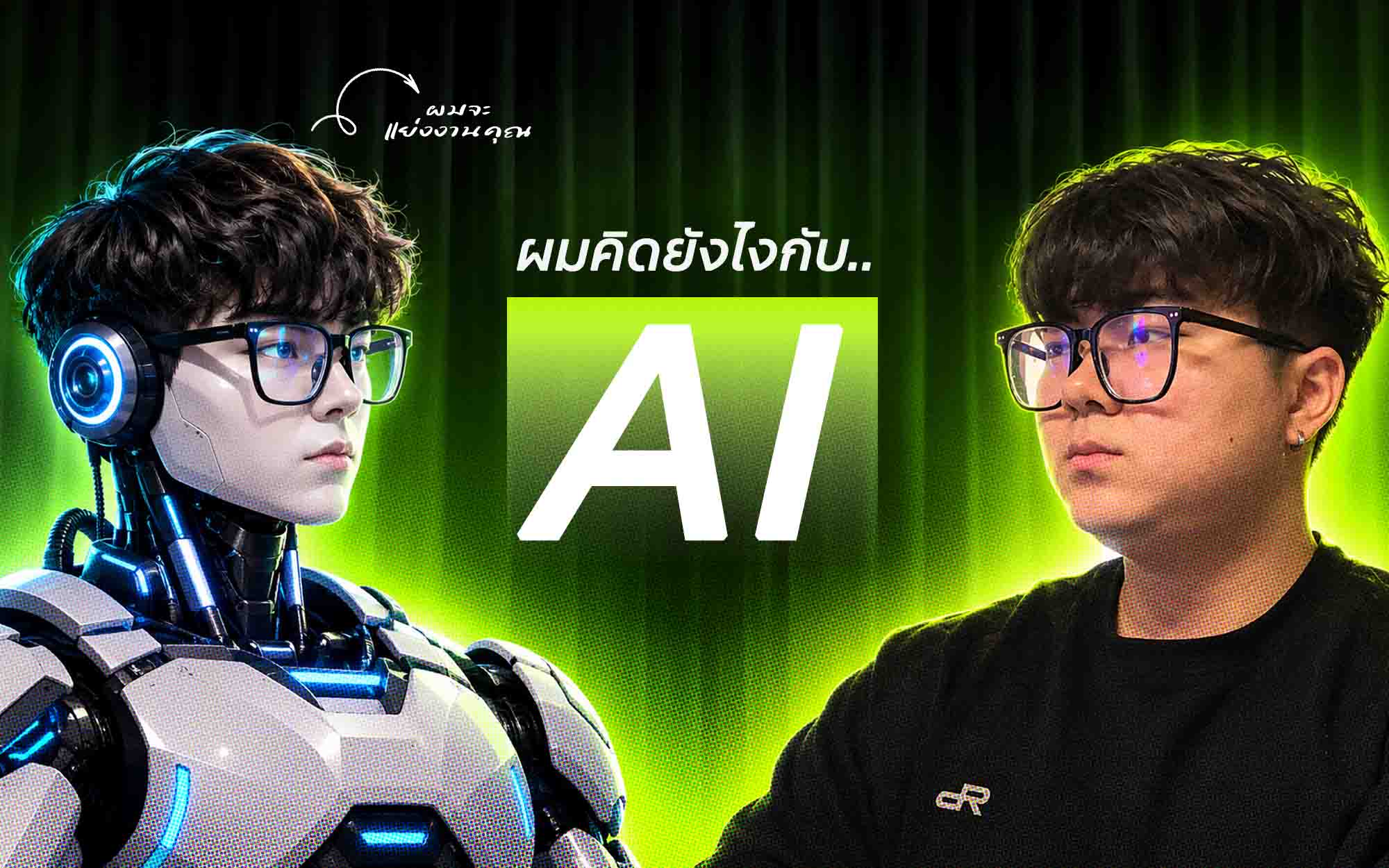
Lately a lot of people have been asking me, "Aren't you afraid AI will take your job?" So I wanted to write my answer down here once and for all, as someone who's done Motion and VFX in After Effects for about 7 years and uses AI every day.
The short answer: I'm not afraid, but I'm not careless either.
First, let's admit it: this industry is changing in a big way
I think AI is going to push video and motion work in a very different direction. It's not just another new tool. Work that used to take a whole day now takes minutes. People who've never opened an editing app can make a video that "looks fine." And expectations around speed and price are shifting with it.
Some kinds of work really will disappear, especially work that's pure "process," the kind you can do by following a recipe. Everyone in this field, me included, has to adapt quite a lot. I don't want to fool myself that nothing is changing.
I use AI every day too
Let me be clear: I'm not against AI. I use it constantly, mainly for two things.
- Cleanup work. Repetitive tidy-up tasks that eat time but don't take any creativity.
- Ideation. Brainstorming, finding new angles, and surfacing options I might not think of on my own.
The result is that work really is faster and more efficient. Some Motion projects now wrap in 3–4 days, some in just 1–2. But more important than speed is the time I get back. I put it into the parts viewers actually feel: the idea, the timing, and the small details that make a piece feel "right."
But there are things AI still can't finish for a person
However good AI gets, I still believe good work has to be finished by a human, because there are 4 things it still can't do in our place.
Taste
AI can generate a hundred options in seconds, but it can't tell you which one is "right" for this brand. Choosing one out of a hundred, and knowing what's wrong with the other ninety-nine, is a person's job.
Style and personal voice
When everyone uses the same tools and types similar prompts, the output starts to look the same. What makes a piece memorable isn't the tool, it's the person behind it. That's why I still choose to do VFX by hand on many pieces: that's where the signature of the work lives.
Memes and cultural context
Which memes are still funny, which ones have turned cringe, which jokes Thai audiences get, which jokes could hurt a brand. These change every week. People who live inside that culture can feel it; the tools can't yet.
Timing and feeling
Cut one frame earlier and the feeling changes. Knowing where to slow down and where to pause is something I got from years of working in After Effects, not from reading a formula.
AI is a multiplier, not a replacement
The way I see it, AI is a powerful engine and taste is the steering wheel. A very fast car with no one steering doesn't get anyone anywhere.
So I think people in this field will gradually split into two groups. The first are "operators" who know how to prompt AI but can't tell whether the work is actually good or just looks good. The second are people with fundamentals solid enough to direct and filter. That second group isn't being replaced by AI. AI is making them better and many times faster.
I intend to be in the second group: use AI fully where it's strong, and never let go of the parts it can't do for me.
So what do clients get out of this?
- Faster delivery, because the repetitive work is already taken care of.
- More ideas tried before choosing the best direction and committing to it.
- Every frame still seen by a person who is actually responsible for that piece.
Final thoughts
For me, the important question isn't "Will AI replace us?" It's "Can we use it and still be ourselves?"
The tools will keep changing, but the audience is still people, and people still want to watch work that has a person inside it.